
When money is tight, every running cost looms large. But turning off your MVHR (Mechanical Ventilation with Heat Recovery) unit to save on electricity is often counter-productive. A properly running MVHR system can help protect your home, your health and your heating bills.
The Hidden Cost of Turning Off MVHR
Some homeowners decide to switch off MVHR when tight on cash, figuring the fan’s electricity is dispensable. But that small saving is outweighed by hidden damage. Without continuous ventilation, humidity and moisture build up inside. That can lead to mould, condensation, and damage to fabric. Worse, your heating system must compensate for the heat you lose through uncontrolled leaks and by airing spaces. In many cases, keeping MVHR on produces far greater net savings.
Indeed, claims from various sources suggest MVHR installations in domestic settings can reduce energy bills by 25% to 50% through reduced heating demand. The key is that the heat lost via ventilation is captured and reused, rather than lost to the outdoors.
What Is MVHR, in Plain Terms
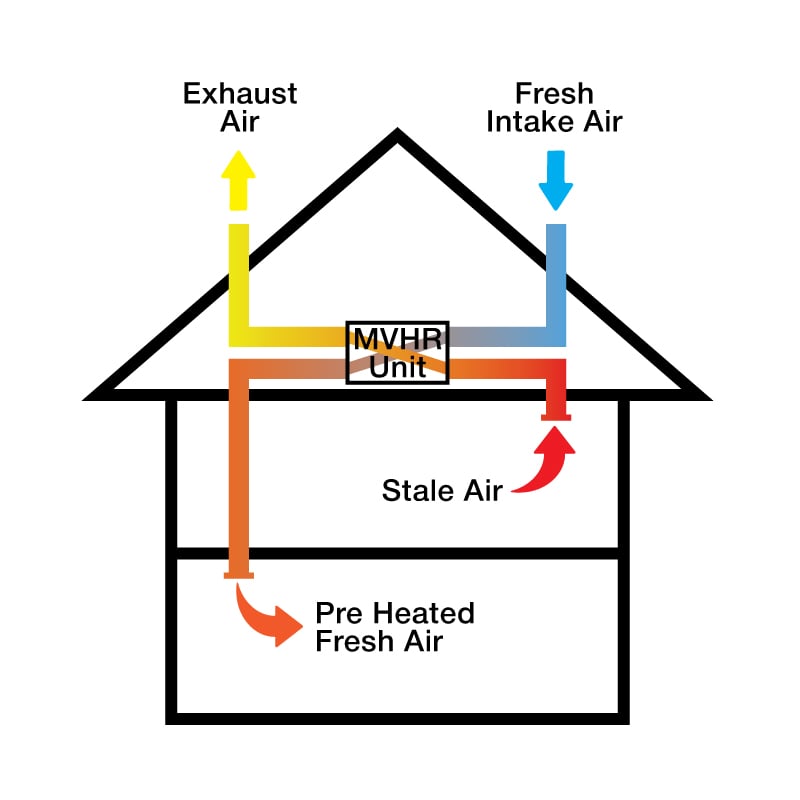
MVHR stands for Mechanical Ventilation with Heat Recovery. It is a system of ducts, fans and a heat exchanger that ensures a home is ventilated without throwing away all its heat. It brings in fresh outdoor air while expelling stale indoor air. But rather than letting the outgoing warm air go to waste, that air passes through a heat exchanger, where it warms the incoming cold air, while keeping the two air streams separate.
MVHR does not heat your home in the way a boiler or radiator does. It pre-warms fresh air so your heating system has to do less work. In modern, airtight homes, where natural leaks are minimal, MVHR is often the most energy-efficient way to maintain airflow without losing comfort.
Because air quality is also assured, you maintain good ventilation and avoid stale, humid air even when you cannot afford big heating bills.
How MVHR Works — A Step-by-Step Cycle
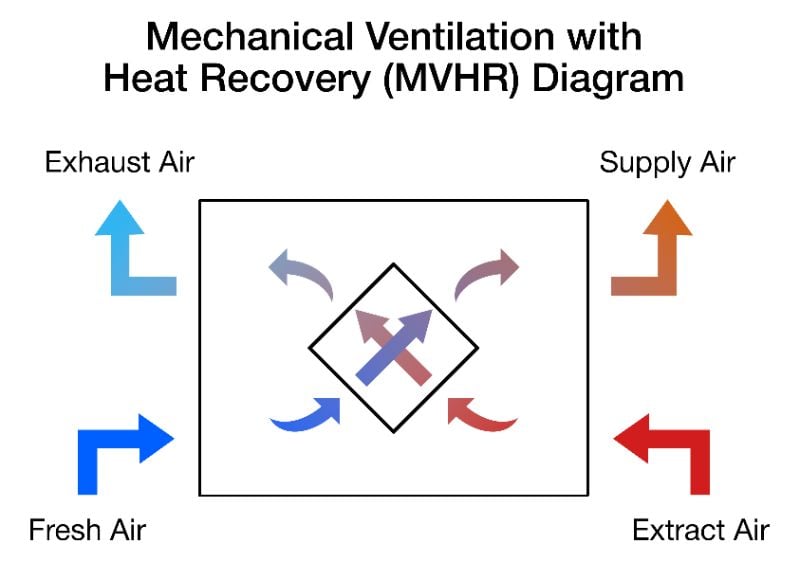
To see how MVHR helps, imagine the following cycle: first, a fan draws out stale, humid air from wet rooms like bathrooms and kitchens. That air is routed through a heat exchanger core. Meanwhile, a parallel channel draws in fresh cold air from outside. As the outgoing and incoming flows pass side by side, heat from the outgoing air is transferred to the incoming air. The warmed fresh air is then distributed to living spaces and bedrooms, while the cooled exhaust is sent outside.
This clever heat transfer means that much of the warmth you’d otherwise lose is reclaimed. Some systems even include a summer bypass, which allows fresh air to bypass the heat exchanger when outdoor air is cooler, providing passive cooling in warm weather.
When ducts are tight, fans are well sized, and the system is balanced, MVHR can operate quietly and continuously — effectively and invisibly.
The Role of Filters in an MVHR System
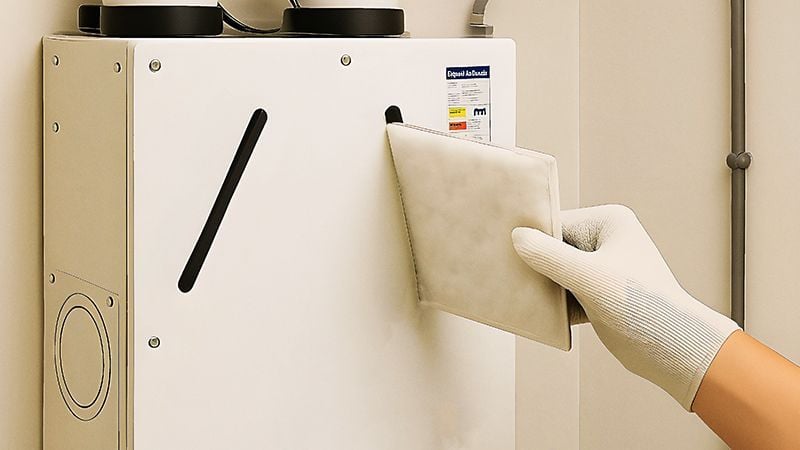
Filters are essential to keeping MVHR systems healthy and efficient. There are typically two sets of filters—an intake filter and an internal filter. The intake filter blocks dust, pollen, pollutants and airborne particles from entering the system. The internal or exhaust-side filter helps protect the mechanical parts of the unit from debris.
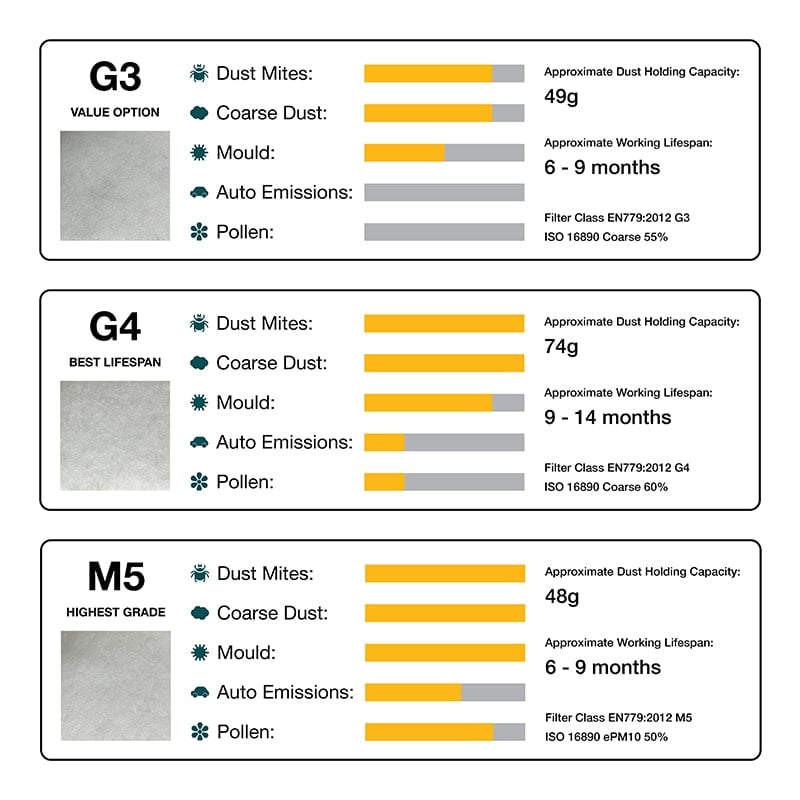
Filters tend to come in grades: G3, G4 and M5. The choice depends on local air quality, allergen sensitivity, and pollution sources near your home.
If filters become clogged or dirty, airflow resistance goes up. That forces the fans to work harder, reduces heat exchange effectiveness, and erodes your savings. Thus, regular inspection and cleaning or replacement is critical. Most guides recommend checking every 6–12 months, and replacing at least yearly depending on pollution levels.
Thus, part of keeping MVHR running cost-effectively is disciplined filter maintenance.
Why MVHR Helps You Save on Heating Bills
The central benefit of MVHR lies in its heat recovery. Every hour that stale air is expelled, some of its heat would otherwise be lost. But through heat exchange, much of it is “recycled” into warming fresh air. That means your boiler or heat pump only needs to top up to comfortable levels, not compensate for large ventilation losses.
In quantifiable terms, sources report that installing MVHR may cut energy (heating) demand by 25% or more. Some claims even go up to 50% under optimal conditions. Because fan electricity is modest compared to heat energy, the net effect is positive. For example, the Net Zero Carbon Guide suggests that even with modest efficiency, the energy saved by heat recovery (2.8 kWh in one scenario) exceeds fan power (1.8 kWh).
In older or retrofit homes, the performance gain depends on the airtightness, duct integrity, installation quality, and maintenance. If leakages or poor commissioning exist, the gains may shrink.
Nonetheless, especially in well-sealed homes, MVHR is one of the better bets for paying back initial costs via lower heating bills.
Common Objections—and Why They Don’t Always Hold
A frequent objection is noise. If fans or ducting are badly installed, noise or drafts may irritate occupants. In those cases, some people switch MVHR off or reduce its use. But that forfeits all the heat-recovery advantage. Often, the problem is remediable: better silencers, improved insulation or duct layout can quiet the system.
Another complaint is that MVHR is a waste of electricity. But most modern units are efficient; their fan load is small relative to heat energy recovered. When poorly commissioned, however, the system can run inefficiently and even negate savings.
Some homes are simply too leaky or have constraints in duct routing, making MVHR less viable. In these cases, retrofitting MVHR may cost between £8,000 and £20,000 in larger homes. Yet experts like Russell Smith and David Hill emphasise that with careful planning, retrofit is often possible.
Thus, before deciding to turn off MVHR, check whether noise, commissioning or design issues are the true culprits.
Retrofit Challenges but Possible Gains
Retrofitting MVHR into an existing home is harder than installing it in new construction, but not impossible. Experts recently noted that older houses often present space constraints, internal burrowing, and stiff structural walls. The key is early planning — for example during major renovation works — to provide duct paths and conceal them behind furniture or inside cavities.
Case studies of “deep retrofits” show remarkable results. For instance, a north London terrace was transformed into a zero-energy-bill home by combining MVHR, insulation, airtightness and solar generation. That family no longer pays heating bills, though they invested heavily and knew they would live long-term in that house.
Hence retrofit is feasible, but only if done as part of an integrated upgrade—not in isolation.
Practical Tips to Run MVHR Cost-Effectively in Tight Times
If your budget is stretched, you can still make MVHR deliver value. First, operate it at the lowest continuous (trickle) speed recommended by the manufacturer. That gives constant ventilation with minimal energy use. Next, clean or replace filters on schedule so airflow stays optimal and resistance stays low.
Seal all duct joints, avoid sharp bends, and ensure the duct layout is smooth and efficient. Proper commissioning and balancing (making sure airflow is correct in each room) is essential—suboptimal balance can cost more in wasted heat than you think.
Boost modes should be reserved for short periods (cooking, showers), not left running all day. If noise is a problem, use acoustic insulation around ducts or better silencers. Finally, monitor energy use—it may reveal if your fan is drawing more than it should.
With those measures, MVHR can continue to pay dividends even when every pound counts.
Final Word: Don’t Switch It Off—Tame It Instead
When money is tight, the instinct to disable systems seems sensible. But with MVHR, turning it off is likely to lead to worse outcomes: mould, poor air quality, and bigger heating bills. A properly installed, balanced and maintained MVHR system recovers heat, keeps air fresh, and reduces your net heating demand.
Yes, the benefit depends on airtightness, good ductwork, decent filters, and careful commissioning. But for most airtight or retrofit-upgraded homes, MVHR remains one of the most effective ways to reduce energy costs sustainably.
So don’t switch it off. Use it wisely. Maintain it. Let it quietly and efficiently protect your comfort, your health—and your wallet.