
What Is MVHR — Fresh Air Without the Heat Loss
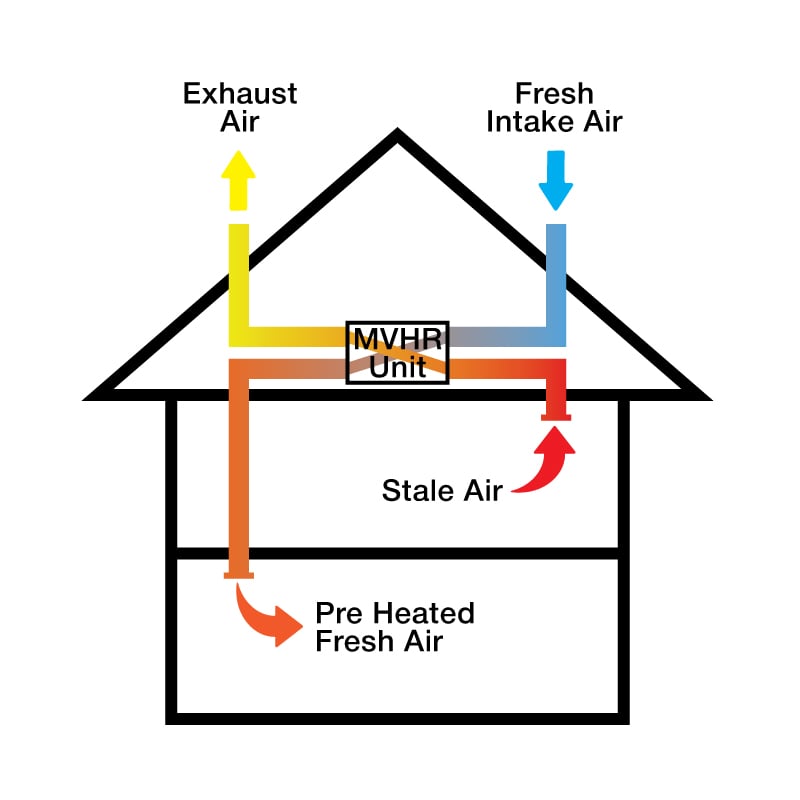
Mechanical Ventilation with Heat Recovery (MVHR) brings fresh outside air into your home while removing stale indoor air. It works by recovering heat from the outgoing air and transferring it to the incoming stream, allowing your home to stay well-ventilated and energy-efficient.
The UK Government promotes MVHR as part of low-energy home ventilation strategies, improving indoor air quality while maintaining warmth.
Why Ventilation Matters for COVID-19 and Flu
Airborne viruses like COVID-19 and influenza spread most easily in poorly ventilated indoor spaces. Research and guidance from CIBSE (Chartered Institution of Building Services Engineers) and REHVA (Federation of European Heating, Ventilation and Air Conditioning Associations) show that increasing ventilation lowers the concentration of infectious particles in the air.
Good ventilation isn’t a cure, but it’s one of the most effective ways to reduce transmission risk indoors.
What Are MVHR Filters and Why They Matter
An MVHR system uses two filters:
-
One at the fresh-air intake — to protect the unit and prevent particles, debris or insects entering the property.
-
One on the extract — to capture particles from inside the property and stop dust clogging the unit.
These filters protect both your MVHR system and your household from dust, pollen and pollution.
Understanding Filter Grades: G3, G4 and M5
MVHR filters are rated according to European standards such as EN779 (now ISO 16890).
-
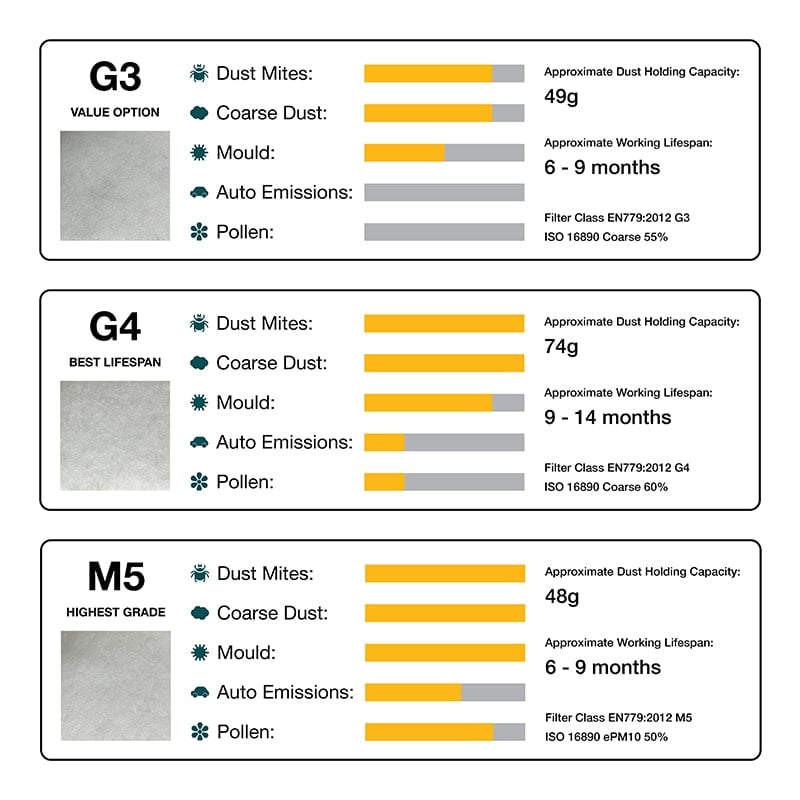
G3 and G4 filters are coarse filters designed to capture large particles such as dust, hair and pollen.
-
M5 filters are medium filters that capture a much higher percentage of smaller particles — including some fine aerosols.
Upgrading from G3 or G4 to M5 offers better small-particle filtration, though no domestic filter can completely stop viruses.
How Much Protection Do MVHR Filters Provide Against Viruses?
Let’s be honest: no standard MVHR filter fully blocks viruses.
G-class filters (G3, G4) remove large dust and pollen but allow smaller particles to pass through.
M5 filters improve capture of fine particles — some of which can carry viral aerosols — but even these cannot guarantee total protection.
Filters are an important layer, not a silver bullet.
How MVHR Reduces Infection Risk in Homes
MVHR systems help by diluting indoor air with clean outdoor air. This lowers the concentration of airborne particles — including potential viruses.
The heat recovery unit means you can ventilate continuously without losing warmth.
According to REHVA and CIBSE, running MVHR continuously is one of the best ways to maintain healthy air quality in modern airtight homes.
Can MVHR Help Against COVID-19, Flu and Colds?
Yes — to a degree.
MVHR can reduce the overall amount of virus in the air by improving airflow and filtration.
No — it can’t stop infection on its own.
Transmission through close contact and contaminated surfaces still occurs.
MVHR is most effective when combined with other measures such as hygiene, distancing and isolating when unwell.
As REHVA puts it, ventilation is “a key part of infection control, but not a complete solution.”
How to Get the Most from Your MVHR System
Here’s how to make your MVHR as effective as possible:
-
Upgrade filters to the highest grade your unit supports — typically M5.
-
Replace filters regularly, every 3–6 months depending on dust levels.
-
Run the system continuously when the home is occupied.
-
Keep vents clean and unblocked.
-
Avoid recirculating air unless the unit includes proper filtration.
A clean, well-maintained MVHR unit delivers far better protection and efficiency.
When MVHR May Be Less Effective
MVHR can only help if it’s maintained correctly. Dirty filters reduce airflow and limit dilution, while blocked ducts or failed fans make the system ineffective.
Recirculating systems that don’t bring in enough outside air can even increase risk. Always ensure your MVHR is supplying fresh air rather than recirculating stale air.
The Bottom Line — Balanced, Truthful Advice
MVHR is not a medical device, but it’s one of the most practical tools for keeping indoor air fresh and reducing the spread of respiratory infections.
Upgrading to an M5 filter, keeping it clean and running your MVHR continuously will reduce airborne risk, improve air quality and help your home stay healthy — all without sacrificing comfort or energy efficiency.