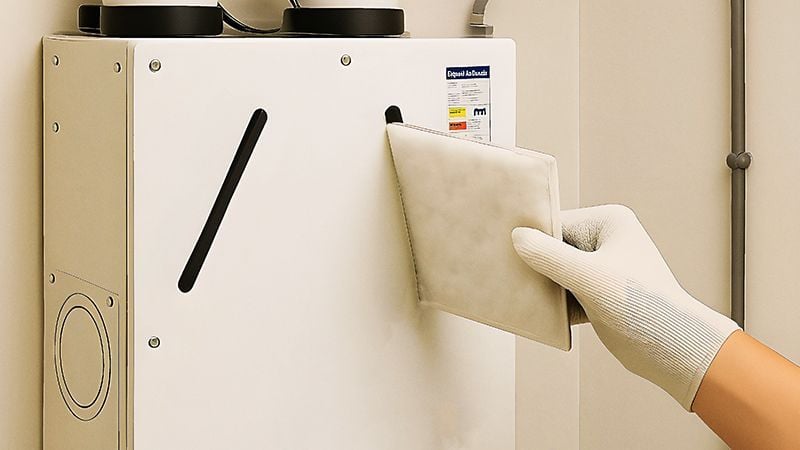

In this article, we explore the reasons why MVHR filters typically come in filtration grades G2 to M5. These filters play a crucial role in maintaining indoor air quality by capturing various airborne particles. Understanding the balance between filtration efficiency and airflow resistance, cost-effectiveness, ease of maintenance and versatility helps explain why these filter grades are commonly used in MVHR systems. By choosing the right filter grade, you can ensure optimal performance and air quality in your space.
MVHR Filters: G2 to M5 Grades
G2 to G4 Filters:
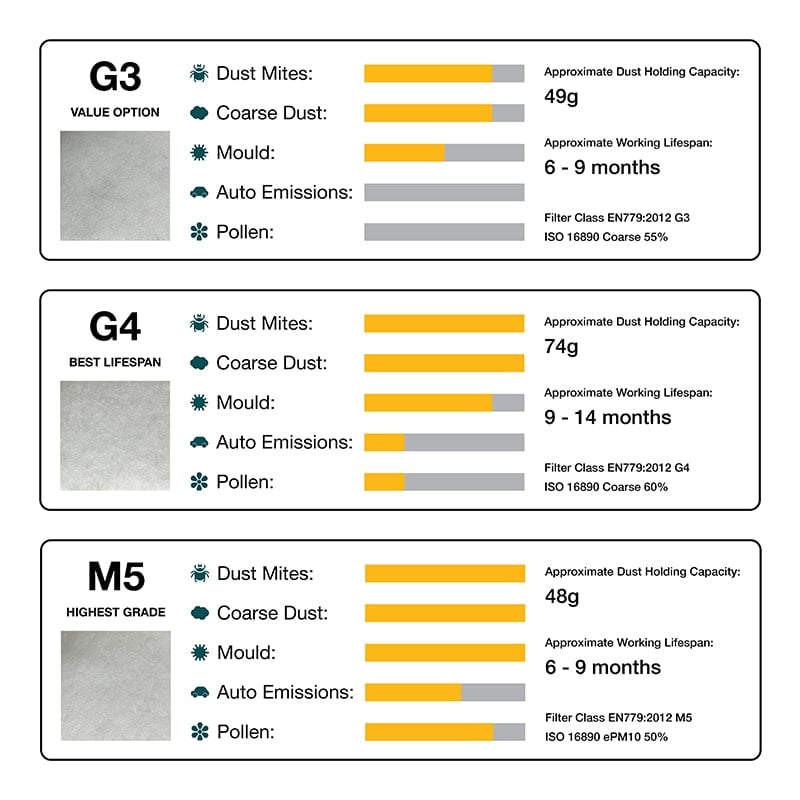
G2, G3 and G4 filters are coarse filters primarily used for capturing larger particles such as dust, pollen, and textile fibres. These filters are effective at removing visible particulate matter from the air, making them suitable for basic air quality improvement.
M5 Filters
M5 filters are more advanced and are designed to capture smaller particles that can affect health. These include: mould spores, pet dander and finer dust particles. People often use these filters in settings where they require higher air quality, such as homes with allergy sufferers.
Reasons for Using G2 to M5 Grades in MVHR Systems
1. Balance of Filtration and Airflow: MVHR systems require a balance between filtration efficiency and airflow resistance. G2 to M5 filters provide adequate filtration without significantly impeding airflow. This ensures the system operates efficiently without putting excessive strain on the ventilation mechanism.
2. Cost-Effectiveness: Filters in G2 to M5 are generally more cost-effective compared to higher-grade filters like HEPA (High-Efficiency Particulate Air) filters. This makes them an economical choice for maintaining good air quality without incurring high maintenance costs.
3. Maintenance and Longevity: Filters in this range are easier to maintain and have a longer lifespan. Regular cleaning or replacement of these filters ensures the MVHR system continues to operate effectively, capturing harmful particles and providing fresh air circulation.
4. Versatility: These filters are versatile and suitable for various environments, including residential homes, offices and light commercial spaces. They efficiently handle typical indoor pollutants, making them a practical choice for most MVHR applications.
5. Machine Compatibility: MVHR systems are designed with specific fan capacities and pressure requirements to maintain optimal airflow throughout the ventilation network. Installing higher-grade filters with a significantly higher pressure drop could exceed the system’s capabilities. This could lead to excessive strain on the fan motor and potentially cause mechanical failure.
In Conclusion…
In summary, G2 to M5 grade filters in MVHR systems strike an optimal balance between effective air filtration, system efficiency, cost, and ease of maintenance. This makes them a popular choice for improving indoor air quality across various settings.